

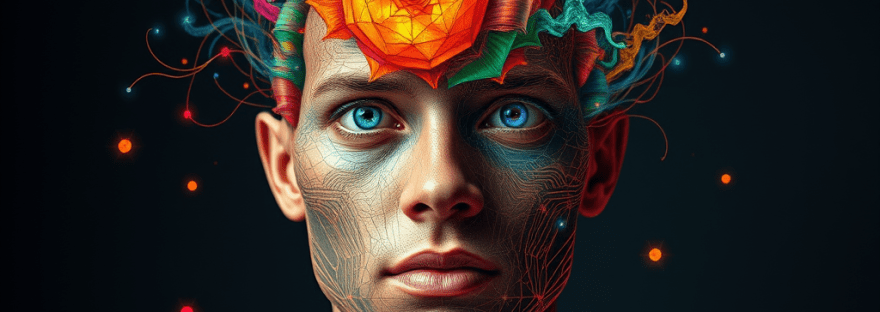
The very complexity of our modern consciousness, with all its layered contradictions and curated identities, isn’t just a problem to solve — it’s the raw material from which deeper wisdom, resilience, and authenticity can be forged. Our behavioral inconsistencies or contradictions aren’t moral failures; they are signposts pointing toward uncharted territory where values meet reality. The work lies not in simplifying the self, but in courageously weaving its fragments into a tapestry of conscious integrity.
Watch the video and read the text that follows for more clarity on the subject.
Like, share, and spread the positivity!
OUTLINE:
00:00:00 Introduction to Fragmented Consciousness
00:00:33 Causes of Fragmentation
00:01:17 Diagnosis and Understanding
00:01:41 Harnessing Multiplicity

Consider Maya, an environmental lawyer who passionately champions sustainability, yet books frequent short-haul flights for networking, her carbon footprint a blind spot eclipsed by professional urgency. Or David, a family values advocate who publicly condemns exploitative labor, yet habitually purchases fast fashion for convenience, the dissonance buried beneath layers of daily stress. These successful, morally aware individuals exemplify fragmented consciousness: their implicit attitudes diverge sharply from explicit values, subtly steering behavior while evading conscious scrutiny.

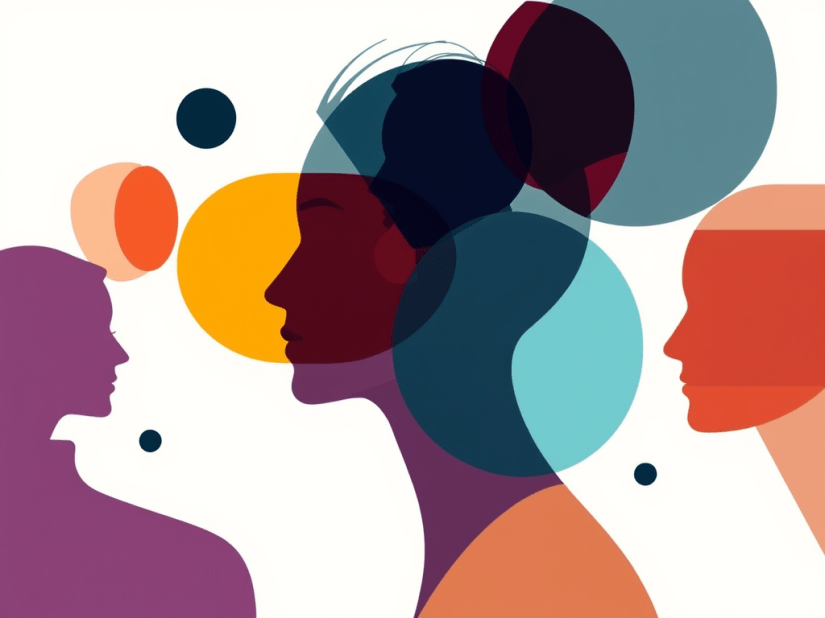
This fragmentation arises not from illness, but from the crucible of modern existence we actively engage with. Identity compartmentalization – the lawyer, the consumer, the activist – creates sealed mental chambers. Algorithmic echo chambers feed curated ideological snippets, reinforcing selective beliefs without holistic integration. Crucially, performative ethics emerge; the appearance of alignment on curated social platforms or in professional circles can supersede deep, lived congruence, allowing inconsistencies to flourish unnoticed. The sheer cognitive load of managing multiple online/offline personas and constant task-switching further exhausts the integrative capacity of the conscious mind.

Diagnosis begins not with retreat, but with heightened metacognition within the storm. Observe emotional friction – that pang of unease when booking the flight, the fleeting guilt with the online purchase. Track behavioral contradictions without self-recrimination. Understanding acknowledges fragmentation as an adaptation, not a failure. The path to strength lies in consciously harnessing this multiplicity.

Instead of suppressing dissonant fragments, deliberately engage them. Use the lawyer’s pragmatism to question the activist’s idealism, and vice-versa. Let the discomfort of inconsistency fuel deeper inquiry, forcing synthesis. Schedule dedicated ‘integration reflection’ amidst the multitasking – brief moments to ask, “How do these actions truly align?” This conscious navigation of the fragments, this intentional weaving of disparate threads under the lens of core values, transforms cognitive dissonance from a liability into a dynamic engine of self-awareness and resilient, multifaceted integrity.
The strength emerges not from simplicity, but from the skillful orchestration of complexity.





























 we model Human-AI Symbiosis