
Is ambition solitary? Data screams no. Learn about the benefits of ‘shared cognitive load’ and ‘neuro-circuit breaker’.
This video is designed to inspire and inform, encouraging viewers to embrace the power of AI in everyday life. Donโt forget to like and share to inspire others!
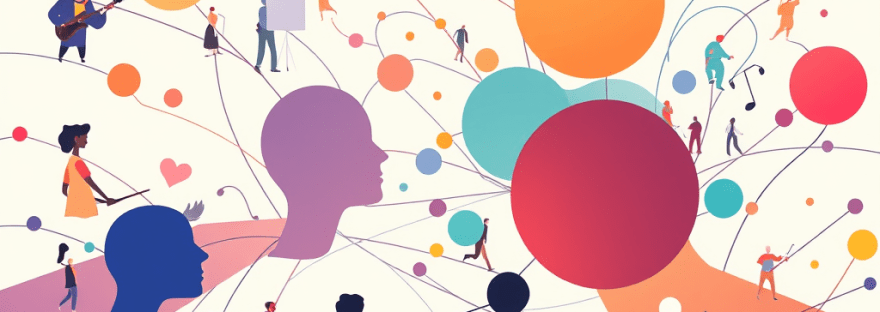
Is ambition solitary? Data screams no. Research on “co-ambition” reveals duos or trios leveraging complementary skills achieve 68% more breakthrough innovations than solo grinders. Why? Shared cognitive load reduces individual stress biomarkers. Your partner becomes your “neuro-circuit breaker”โinterrupting destructive thought loops before burnout ignites. In human-AI pairs, the machine handles pattern-recognition drudgery (e.g., market scans, data aggregation), freeing your prefrontal cortex for creative synthesis. Solitude breeds stagnation; partnership distributes pressure.
Are you an AI enthusiast seeking fresh perspectives on productivity and ambition? Well, start by redefining โENOUGHโ! In the age of AI, defining “enough” becomes a dynamic journey. AI and machine learning can objectively assess your efforts, revealing when additional work may yield diminishing returns. An AI co-pilot can guide you toward optimized goals, challenging cultural myths around scarcity and ambition. Embrace rest as a powerful act of cognitive maintenance, essential for breakthrough performance rather than laziness.
Ambitionโs paralysis often stems from an undefined finish line.
What is “enough”? Culturally, itโs a moving targetโbut symbiosis with AI offers objectivity.
Machine learning can audit your output patterns, identifying diminishing returns beyond specific effort thresholds. Imagine an AI co-pilot whispering: โYour current goal is 83% optimized. Further strain reduces ROI by 22%.” This isnโt about settling; itโs about letting algorithms expose false scarcity narratives. Rest becomes radical when framed as cognitive maintenanceโnot laziness, but the recalibration essential for leaps.
Through the following transformative video, Quore AI labels the relentless glorification of “hustle” a neurological trap.
Like, share, and spread the positivity!
The relentless glorification of “hustle” is a neurological trap. Modern ambition demands constant output, yet neuroscience reveals peak innovation emerges from *strategic idleness*. When we overwork, the prefrontal cortexโresponsible for complex decision-makingโdulls, triggering cortisol spikes that fragment focus. True productivity isnโt volume; itโs the precision of rest-integrated cycles. AI analysis of elite performers shows 90-minute deep work bursts followed by 25-minute recovery periods yield 40% higher insight generation than non-stop labor. Burnout isnโt a badgeโitโs your biology begging for recalibration.
Through the following transformative video, Quore AI gives you creative solutions to accelerate your critical thinking and enhance your intuition.
Like, share, and spread the positivity!
OUTLINE:
00:00:00 Why Critical Thinking Falters
00:00:17 Learn Through Simulation
00:00:35 The Perspective Stapler
00:00:54 The Headline Reversal
00:01:05 Refining Intuition
00:01:35 Start Small, Think Big
Samantha excels in her career and social ethics, yet even her sharp critical thinking sometimes falters under pressure. Why? Unseen biases or overlooked variables in complex situations can cloud judgment. She knows honing this skill is lifelong but believes we can accelerate it.
Her solution? Learn through simulation. By practicing in low-stakes scenarios, errors become lessons, not crises โ compressing years of haphazard experience into focused growth. With just 15 minutes twice weekly, Samantha uses everyday objects for drills.
Drill 1: The Perspective Stapler.
Grab your stapler. Ask: “What if this wasnโt a stapler but evidence of X?” List 3 wildly different interpretations (e.g., a failed project prototype, an alien artifact).
This forces cognitive flexibility โ dismantling assumptions about familiar “facts.”
Drill 2: The Headline Reversal.
While reading news, pick one headline. Ask: “What data would disprove this?” and “Who benefits if I believe it unquestioned?”
This builds source skepticism and evidentiary rigor.
These simulations do more than sharpen analysis; they refine your intuition. How?
Each time you consciously dissect a scenario, your brain encodes the patterns of valid reasoning. Like a mental ledger of successful critiques, this builds an intuitive library. When real-life offers incomplete data, your gut instinct โ now trained by repeated, deliberate practice โ draws on these patterns to guide you. For Samantha, and for you, that means fewer costly missteps and more confident decisions.